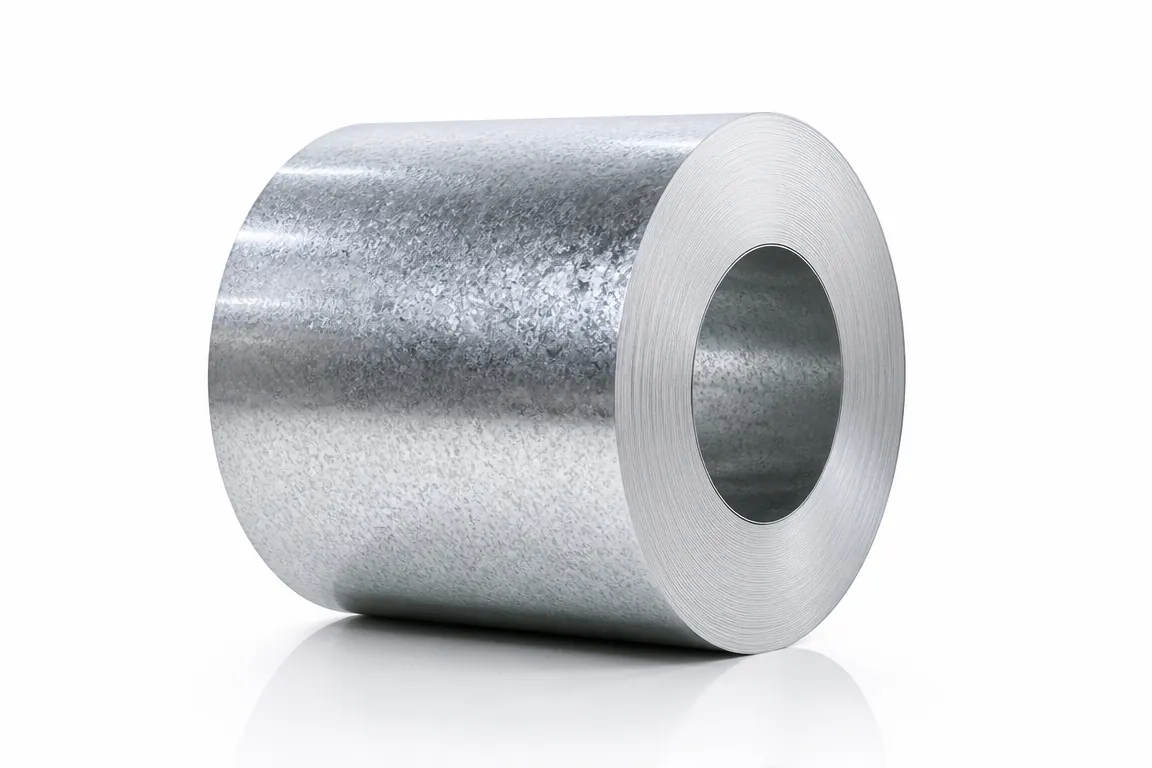
Galvanized and color-coated steel both exist to keep moisture and oxygen away from the base metal, but they do it in different ways. Galvanizing coats the steel in zinc, which acts as a barrier and continues to protect the surface sacrificially at cut edges, scratches and drilled holes. Color coating adds a painted layer on top of that galvanized substrate, so the material gains color, appearance and a further barrier against weather and light. The useful question for a buyer is not which coating is better, but which combination of properties the application actually demands.
Galvanized material is usually the right choice where the surface will not be seen and mechanical protection matters more than appearance. Purlins, structural frames, cable trays, greenhouse tubes, fencing posts and ductwork all fall into this group, because the zinc layer keeps working even after the steel is cut, drilled or welded. The figure that decides how long the coating lasts is the coating mass, written as a Z number followed by grams per square meter, and it should be confirmed as a total for both sides rather than a single-side reading. Two quotations can both say galvanized and still differ significantly once this number is compared.
Color-coated steel, also called pre-painted or PPGI, earns its higher cost wherever the surface is visible or has to look consistent from one panel to the next. Roofing and wall cladding, cold-storage rooms, appliance housings, signage and branded buildings are typical uses. Here there are three layers to specify rather than one: the zinc coating underneath, the primer, and the topcoat, together with the total paint thickness measured in microns. A color code on its own says nothing about how thick the paint layer is or how well it was cured, so ask for the paint system and the micron range, not the color alone.
The most common mistake is to compare offers on color and unit price while leaving the coating specification to the supplier, or to select a coating for an environment it was never intended to face. Coastal sites, industrial atmospheres and repeated forming all change what the coating has to survive, and the answer is often a heavier zinc layer, a different paint chemistry, or both. Tell us the application, the exposure and the forming steps the material will go through, and we will propose a coating specification to match, with the zinc coating mass, the paint system and the mill test certificate stated in the offer. We have supplied coated and uncoated steel for more than twenty years from an eighty-thousand-square-meter facility with an annual capacity of six million tons, serving buyers in more than one hundred countries under ISO 9001, and we are glad to review your requirement.